
A travel warning can change how people plan a journey. Before booking flights, hotels, or activities abroad, many travelers search for official updates to understand whether a destination has safety concerns. These warnings provide important information about possible risks, helping people prepare better and make informed travel decisions. A travel warning does not always mean a place should be completely avoided. In many cases, it highlights specific issues, such as security concerns, health risks, extreme weather, or local problems that visitors should understand before arriving.
What Is a Travel Warning?
A travel warning is an official message that informs travelers about conditions that may affect their safety in another country or region. Governments issue these notices when they believe travelers should be aware of certain risks before visiting a destination. The purpose of a travel warning is to provide guidance, not create unnecessary fear. A warning may suggest taking extra precautions, avoiding certain areas, or reconsidering travel plans depending on the seriousness of the situation. Travel conditions can change quickly. A destination that was considered low-risk months ago may receive a warning after events such as political unrest, natural disasters, or security incidents.
Why Do Countries Issue Travel Warnings?
Governments monitor international conditions and release warnings when travelers may face increased challenges. These notices are usually based on information from security agencies, health organizations, embassies, and local authorities.
Safety and Security Concerns
Crime, terrorism threats, kidnapping risks, or armed conflicts are common reasons for travel warnings. In some cases, the warning may apply only to specific areas rather than an entire country. For example, a border region experiencing conflict may have a different risk level compared with major tourist cities elsewhere in the same country.
Political Changes and Civil Unrest
Protests, elections, government changes, or social tensions can create uncertain conditions for visitors. Large gatherings may affect transportation, public services, or access to certain locations. Travelers visiting during periods of unrest should stay updated and avoid areas where demonstrations or disruptions are taking place.
Health and Medical Risks
Health-related issues can also lead to travel warnings. Disease outbreaks, limited medical facilities, or emergency health situations may affect travel recommendations. Before traveling, visitors should check vaccination requirements, health advice, and available medical services in their destination.
Natural Disasters and Weather Events
Earthquakes, hurricanes, floods, wildfires, and other natural events can temporarily affect travel safety. Authorities may issue warnings to help visitors avoid dangerous areas and follow emergency instructions.
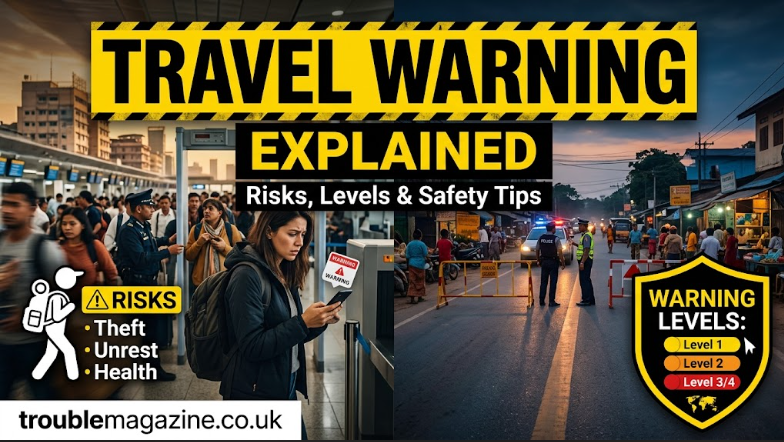
Different Levels of Travel Warnings
Many governments use different levels to explain the seriousness of travel risks. These levels help travelers understand whether they need normal precautions or should reconsider their plans. A lower-level warning may simply suggest being careful, while a higher-level warning indicates more serious concerns that could affect personal safety. Travelers should always read the details behind a warning instead of focusing only on the rating. The explanation usually provides important information about specific risks and recommended actions.
How to Check a Travel Warning Before Traveling
Checking travel information should be part of every international travel plan. Conditions can change between booking a trip and departure day. Travelers should review official government websites, embassy updates, and reliable local sources before leaving. It is also helpful to check information again shortly before departure. Important things to review include entry rules, local laws, health requirements, emergency contacts, and any recent safety updates.
Does a Travel Warning Mean You Should Cancel Your Trip?
A travel warning does not automatically mean a trip must be canceled. The decision depends on the destination, the reason for the warning, and the traveler’s personal circumstances. Someone traveling for work may have different considerations from someone planning a vacation. Similarly, a warning affecting one region may not apply to the entire country. The most useful step is understanding why the warning was issued and what precautions are suggested. Travelers can then decide whether they feel comfortable continuing with their plans.
Travel Warnings and Travel Insurance
Travel insurance policies often have specific rules related to government warnings. Some policies may limit coverage if a traveler visits a destination after serious risks have been publicly announced. Before purchasing insurance, travelers should read the policy carefully and understand what situations are covered. Coverage can differ depending on the provider, destination, and timing of the warning. Having insurance does not remove every travel risk, but it can provide support for certain unexpected situations.
Common Mistakes Travelers Make
One common mistake is ignoring official warnings because a destination is popular with tourists. A place can attract many visitors while still having specific risks that require attention. Another mistake is depending only on social media updates. Online posts may be incomplete or outdated, while official travel notices are created to provide verified guidance. Travelers should also avoid assuming that every warning means the same thing. Some warnings focus on limited areas, while others address wider concerns.
How to Stay Prepared During International Travel
Good preparation can make travel easier during unexpected situations. Travelers should keep copies of important documents, save emergency contacts, and share their itinerary with someone they trust. Learning basic information about local customs, transportation, and emergency services can also help visitors handle unfamiliar situations more confidently. Staying aware does not mean worrying constantly. It means having the right information and knowing what steps to take if conditions change.
Conclusion
Travel warnings help people understand possible challenges before visiting another destination. They provide useful information that allows travelers to prepare instead of relying on assumptions. A warning should be viewed as guidance rather than a simple yes-or-no decision about travel. Understanding the details behind the notice is often more valuable than looking only at the warning level. By checking reliable updates, preparing properly, and staying aware of local conditions, travelers can make smarter choices and enjoy their journeys with greater confidence.